Three frames from Columbia: NASA's 1996 photographs of an object in low-Earth orbit
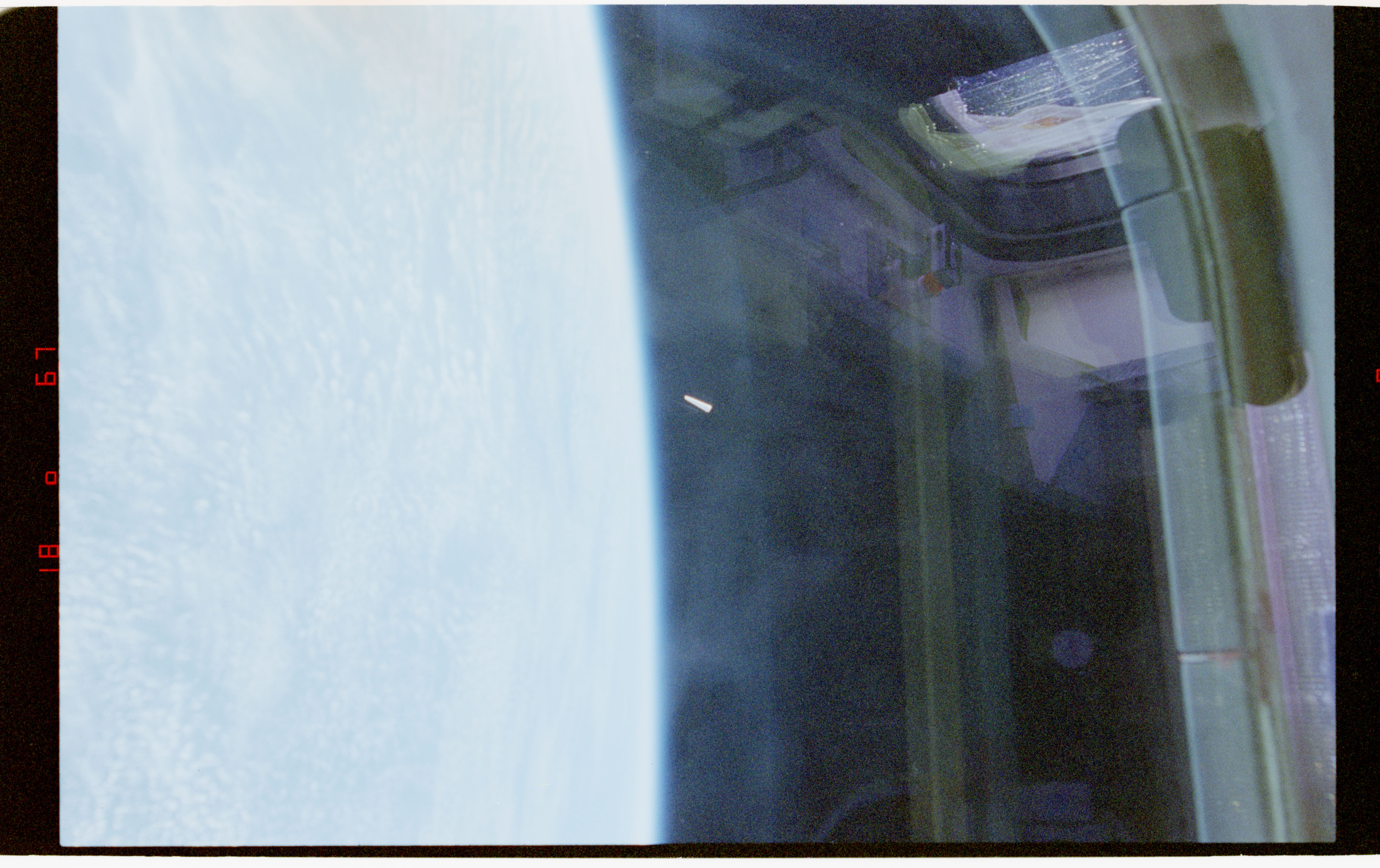
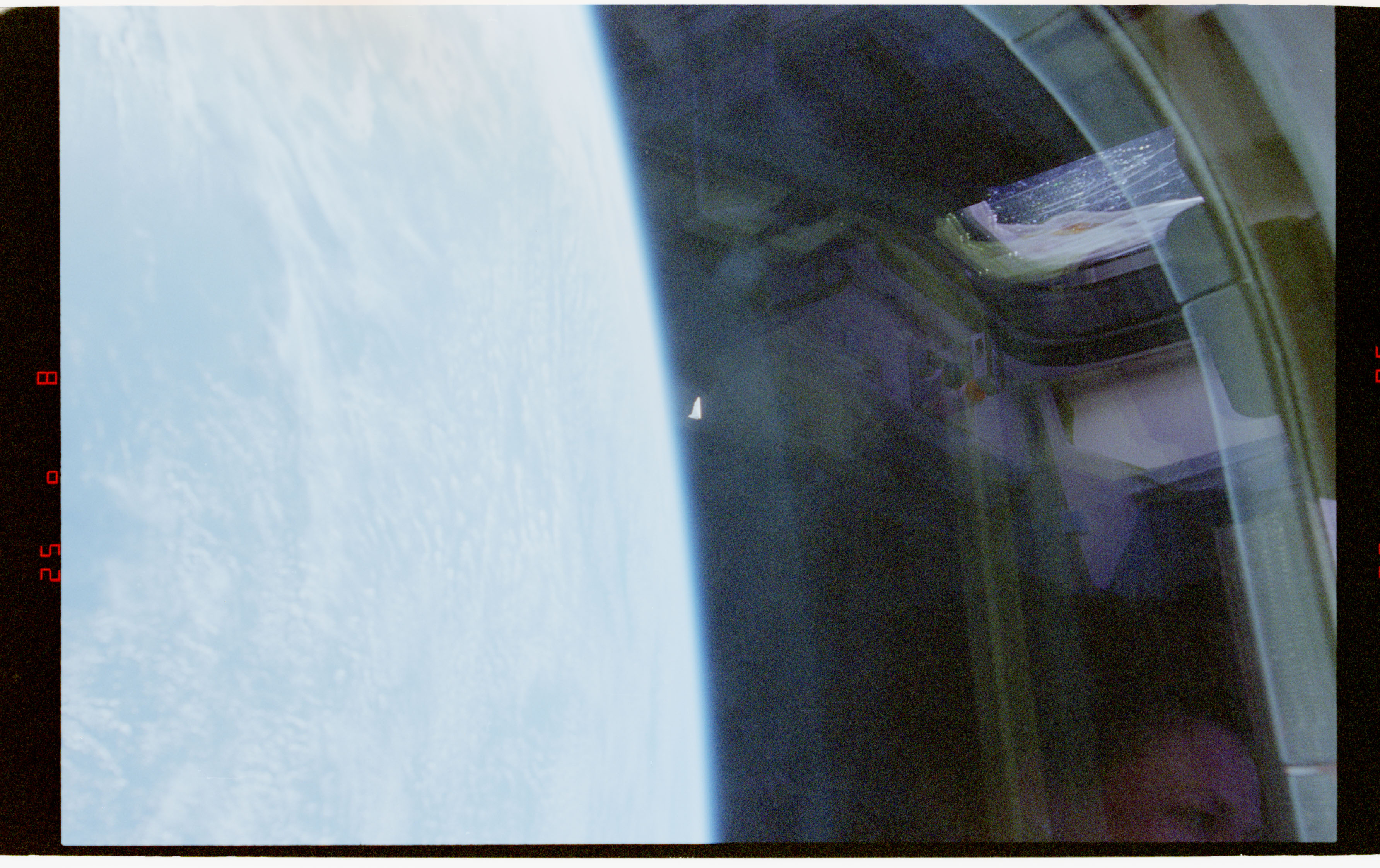
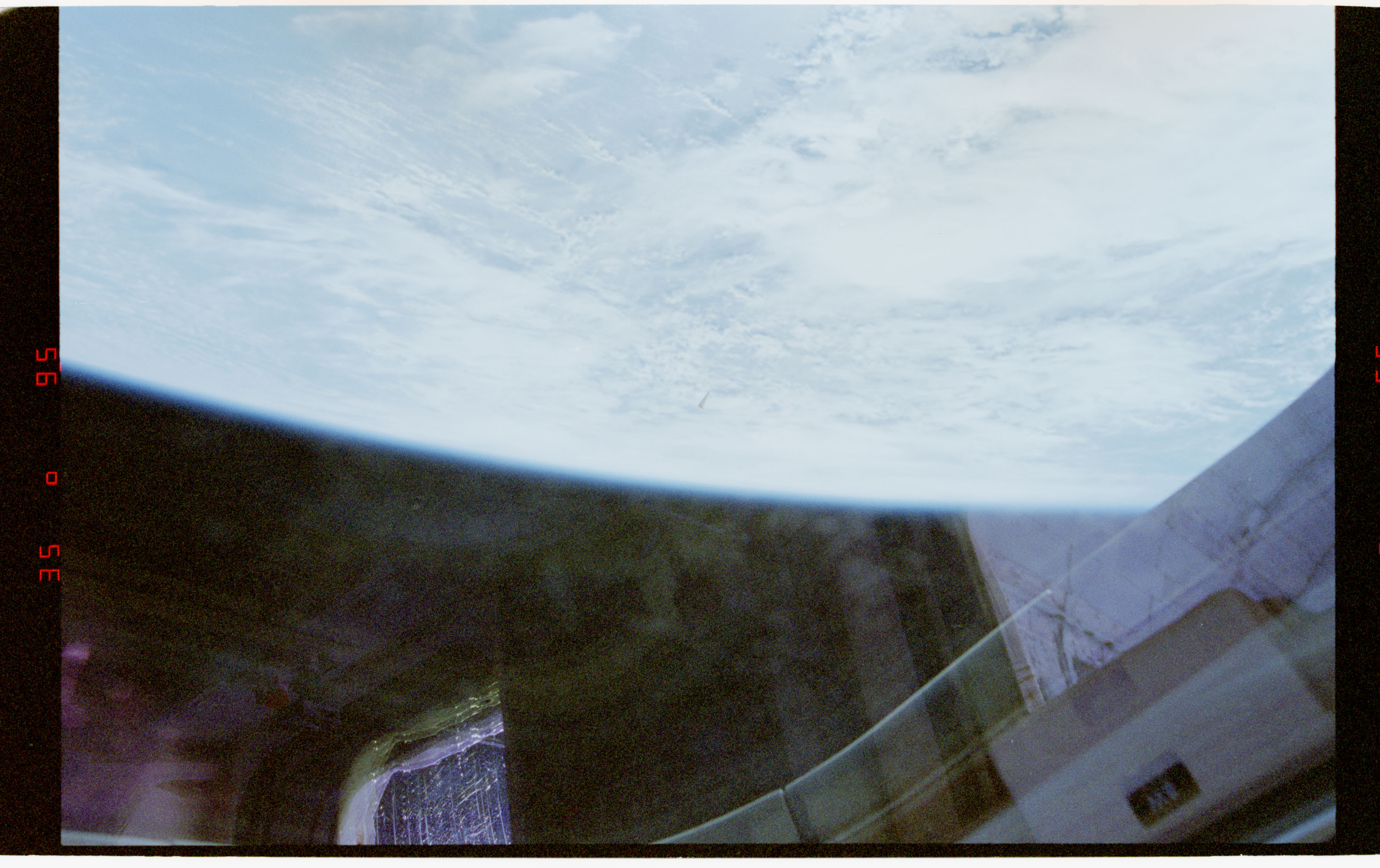
Three photographs taken from Space Shuttle Columbia during the STS-80 mission (November 19 – December 7, 1996) show an unidentified object in low-Earth orbit near the Earth's limb. Across the sequence the object appears to rotate or tumble, then continues along a trajectory that carries it against the face of the Earth. The Department's release includes no NASA disposition for the object, unlike two earlier Shuttle-era anomalies — STS-48 (1991) and STS-75 (1996) — already on the public record.
- Record type
- Sighting
- Primary source
- linked
- Named witnesses
- 0
- Media
- 3
Space Shuttle Columbia's STS-80 mission ran from November 19 to December 7, 1996 — at the time the longest Space Shuttle flight yet flown. Sometime during that mission, an astronaut photographed an unidentified object in low-Earth orbit, not once but three times. PURSUE Release 04 publishes all three frames, and the Department of War chose the first of them as the single defining image of the release.
In the first frame, NASA-UAP-D030, the cloud-covered limb of the Earth curves across the image; a small, bright, elongated object sits in the dark space between the limb and the orbiter's window and payload-bay structure. In the second frame, NASA-UAP-D031, the object appears to have rotated or tumbled since the first exposure. By the third, NASA-UAP-D032, it has moved further along its trajectory and appears superimposed against the face of the Earth itself. Read in sequence, the three images track an object changing orientation and position against a fixed backdrop — exactly the kind of multi-frame record that makes a single anomalous photograph easier to dismiss, and a documented sequence harder to.
The Department's release notes do not attach a NASA disposition to the STS-80 images — no proposed identification, conventional or otherwise, accompanies the file. That is a point of contrast with the two other Shuttle-era on-orbit anomalies already in this archive's record: the 1991 STS-48 downlink video, which NASA attributed to a drifting ice or debris particle reacting to a thruster firing, and the 1996 STS-75 'tether incident' downlink, which NASA attributed to ice and debris near the camera lens. Both of those dispositions remain contested by independent analysts; the STS-80 file, notably, carries no disposition to contest.
Together, the three Shuttle cases span 1991 to 1996 and share a location in this archive: low Earth orbit, photographed from inside a NASA spacecraft, by NASA's own equipment, released through NASA's own archive. STS-80 is the only one of the three built from still photographs rather than downlink video — and the one the Department of War picked to put on the cover of Release 04.
- UFOs: Generals, Pilots, and Government Officials Go on the RecordLeslie Kean
- In Plain Sight: An Investigation Into UFOs and Impossible ScienceRoss Coulthart
- UFO: The Inside Story of the US Government's Search for Alien Life Here—and Out ThereGarrett M. Graff