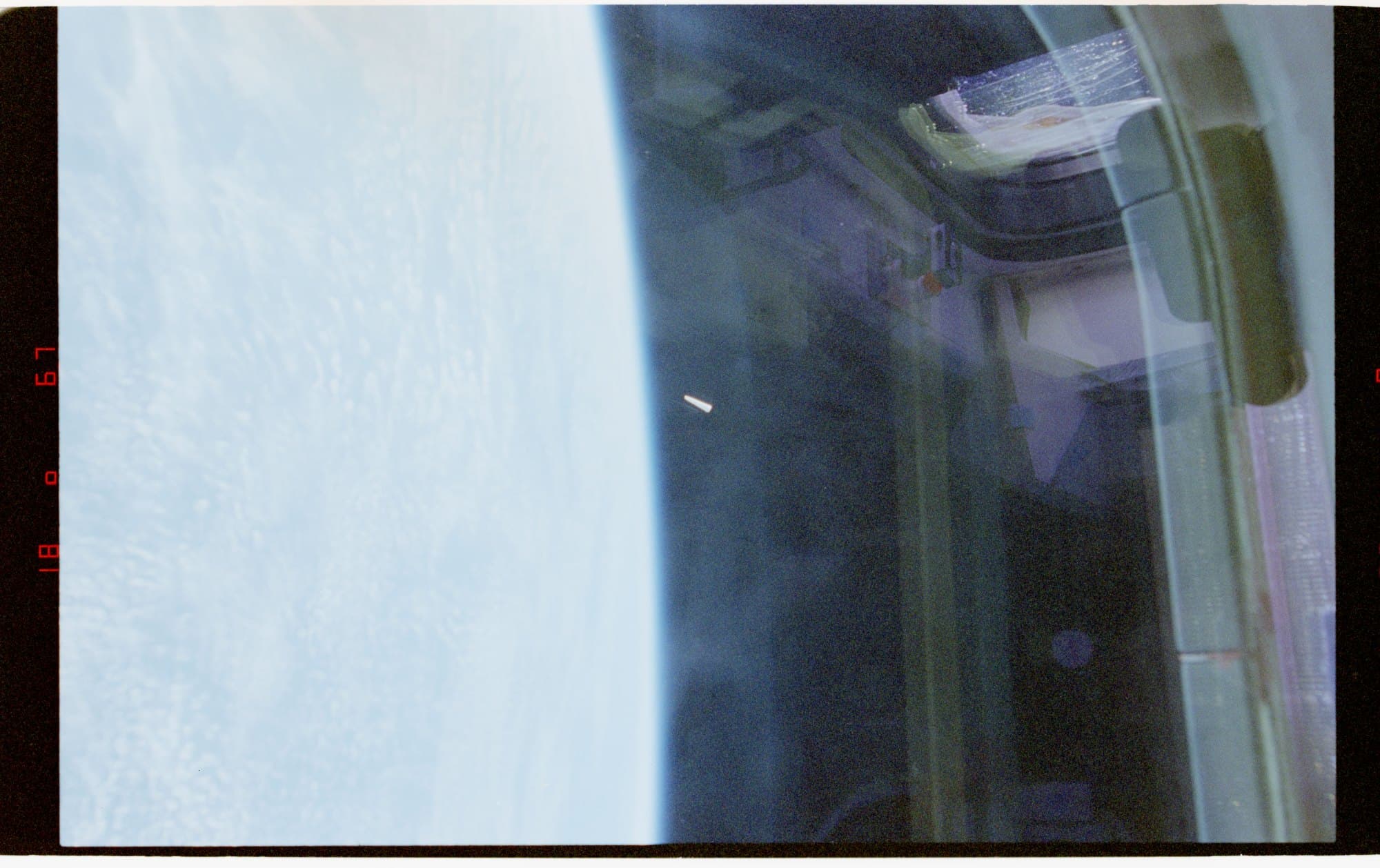
Release 01 was a corpus play, Release 02 a narrative one, Release 03 institutional. Release 04 is archival — and its value is in who was doing the reporting. In 1955 the CIA sat down with four Americans who had watched a luminescent 'greenish-yellow' object from a train inside the Soviet Union. One of them was Senator Richard Russell, the most consequential voice on military affairs in the U.S. Senate. The Agency's own analysis concluded the sighting could 'probably be explained as steep climbing aircraft or missiles,' and that the evidence was 'not sufficiently firm' to conclude the Soviets had built something new.
The document to actually read, though, is DOE-UAP-D004 — a verbatim transcript, not a summary, of a March 1949 conference at Los Alamos convened to explain months of 'green fireball' reports over the laboratory. The attendees include physicists who had built the first nuclear weapons. Edward Teller proposed an 'electron phenomenon' if the objects were not material bodies. Lincoln LaPaz, the meteoriticist brought in precisely because meteors were the leading hypothesis, said that nothing like this had ever been observed in a meteorite fall. The conference adjourned without agreement. It is a rare thing to watch that calibre of scientist run out of explanations on the record.
Two files reward comparison rather than reading. The Pantex incident report from September 2015 — an object over the plant where the United States assembles and disassembles its nuclear weapons — appeared in Release 02 as DOE-UAP-D001 with pages 5 and 6 heavily redacted. Release 04 publishes the fuller version. Set the two side by side and you can see exactly what the Department decided it no longer needed to withhold in the space of seven weeks.
On the modern side: 19 AARO sensor videos from four combatant commands spanning 1996 to 2025, three of them tied to Range Fouler Debriefs in which the observers speak for themselves. One is a 28-year Air Force and Navy veteran reporting flight characteristics 'unlike anything' he had seen. Another, refreshingly, describes a 'large, somewhat deformed balloon.' Both are in the same release, which is roughly the point.